


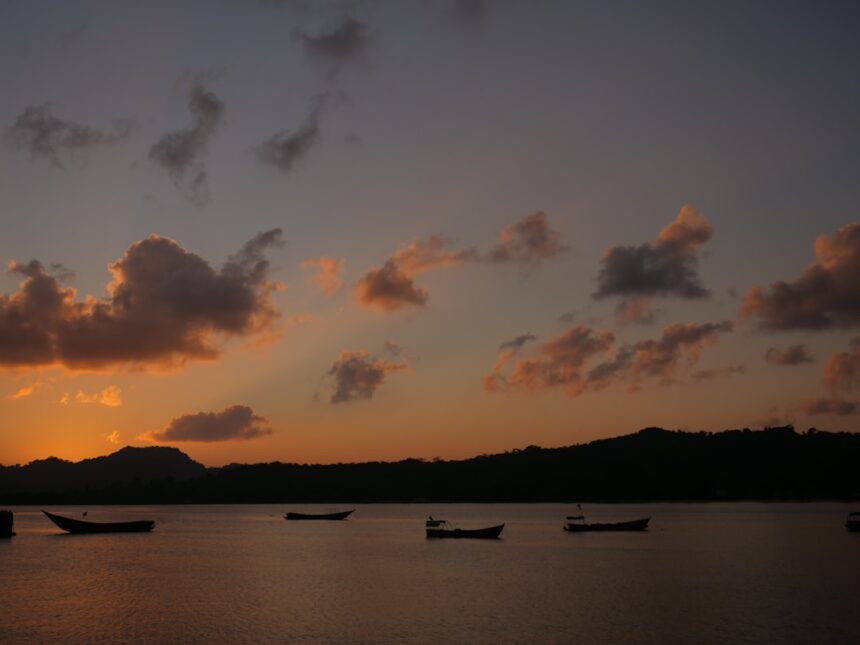
The Andaman Sea, stretching from Port Blair to the Myanmar coast, has become India’s most profitable marine tourism destination in 2026, generating over ₹2,500 crore annually. This pristine water body connects our famous Havelock Island, Neil Island, and Ross Island, attracting 6.8 lakh tourists every year, yaar!
Honestly, most people don’t realize that this sea is technically part of the Indian Ocean and covers an area of 797,700 square kilometers. Matlab, it’s massive!
#AndamanSea #newstrendss #IndiaNews
Geographic Marvel Supporting Andaman Tourism
The Andaman Sea borders Thailand, Myanmar, and Malaysia, but our Andaman and Nicobar Islands occupy the eastern portion. Port Blair, our administrative capital, sits perfectly positioned at 11.67°N latitude and 92.75°E longitude.
The sea depth ranges from 200 meters near our islands to over 4,000 meters in the central basin. Arre bhai, that’s deeper than Mount Kailash is tall! The water temperature stays between 26-29°C throughout the year, making it perfect for marine life.
- Maximum depth: 4,198 meters near Car Nicobar
- Average salinity: 32-34 parts per thousand
- Coral reef coverage: 11,000 square kilometers around Indian islands
- Tidal range: 2.8 meters during monsoons
Marine Biodiversity Worth Protecting in 2026
Mujhe lagta hai, very few Indians know that our Andaman Sea hosts over 1,200 fish species and 200 coral varieties. The Mahatma Gandhi Marine National Park near Wandoor protects 15 islands and their surrounding waters.
Dugongs, those gentle sea cows, still graze in seagrass beds near Little Andaman Island. Marine biologists from Wildlife Institute of India counted 28 dugongs in 2025, up from just 18 in 2020. Sahi hai, conservation efforts are working!
- Endangered species: Hawksbill turtles, Green turtles, Dugongs
- Commercial fish: Red snapper, Grouper, Tuna, Mackerel
- Coral types: Staghorn, Brain coral, Table coral
- Mangrove coverage: 617 square kilometers along coastlines
Economic Impact and Tourism Statistics
The Andaman Sea directly supports 2.3 lakh people working in fishing, tourism, and shipping industries. Scuba diving alone contributes ₹850 crore annually, with operators like Andaman Bubbles and SeaShell charging ₹4,500-₹8,000 per dive session.
Helicopter services by Pawan Hans connect Port Blair to Havelock in 20 minutes for ₹3,200 per person. Ferry services carry 15,000 passengers daily between islands during peak season (December to March).
Blue whale sightings increased by 40% in 2025, attracting marine photographers from Mumbai, Delhi, and Bangalore. Tour packages range from ₹25,000 for 5 days to ₹1.2 lakh for luxury yacht experiences.
Strategic Importance for Indian Defense
The Indian Navy’s Tri-Service Command operates from Port Blair, monitoring shipping lanes carrying 25% of global trade worth $3.4 trillion annually. INS Baaz at Campbell Bay and INS Kohassa at Car Nicobar guard our easternmost waters.
Honestly yaar, the Andaman Sea’s position makes it crucial for India’s ‘Act East’ policy. Chinese vessels frequently transit these waters, making our naval presence essential for regional security.
Looking at 2026 data, the Andaman Sea remains our most pristine marine ecosystem while contributing significantly to India’s blue economy. Matlab, it’s not just beautiful – it’s economically vital for our nation’s maritime future!