


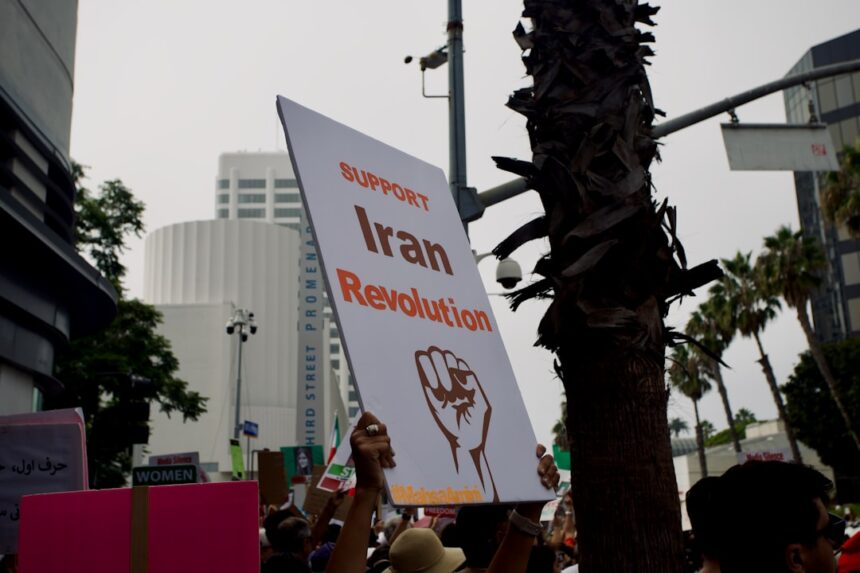
The tech world has become the new battlefield yaar! When we talk about Trump and Iran, it’s not just about politics anymore – it’s about how technology sanctions reshape entire industries. From smartphone chips to social media apps, these geopolitical tensions directly impact what Indians use daily.
#TrumpIran #newstrendss #IndiaNews
Semiconductor Sanctions Hit Indian Tech Giants Hard
Remember when Iran couldn’t access advanced semiconductors? Companies like Infosys and TCS, valued at over ₹6 lakh crore combined, had to completely restructure their Middle East operations. The ripple effect reached Bangalore’s Electronics City and Hyderabad’s HITEC City.
Major Indian firms like Wipro and HCL Technologies lost contracts worth approximately ₹3,400 crore annually when US sanctions blocked tech exports to Iran. Honestly yaar, it showed how interconnected our digital economy really is.
- Advanced processor exports banned under OFAC regulations
- Cloud computing services from AWS and Microsoft Azure restricted
- Indian IT companies forced to exit lucrative Tehran contracts
- Cryptocurrency mining hardware completely blocked
Social Media Platforms Navigate Geopolitical Minefields
The Trump administration’s approach created a blueprint for tech warfare. Platforms like Instagram, WhatsApp, and Telegram faced constant pressure over Iranian users. This directly affected how Indian companies like Reliance Jio and Bharti Airtel manage international partnerships.
Apps developed in Mumbai and Chennai suddenly needed compliance teams just to ensure they wouldn’t face similar restrictions. Bhai, even Indian startups like Byju’s and Zomato had to redesign their international expansion strategies.
Cryptocurrency and Fintech Under Microscope
Iran’s turn to cryptocurrency during sanctions created waves in India’s ₹50,000 crore fintech sector. Companies like Paytm, PhonePe, and Google Pay had to strengthen their anti-money laundering systems significantly.
The Reserve Bank of India spent over ₹200 crore upgrading surveillance systems after seeing how digital currencies helped circumvent traditional banking sanctions. Matlab, it forced Indian regulators to think differently about digital payments.
- Bitcoin mining operations monitored more strictly
- Cross-border remittance apps enhanced KYC protocols
- Indian crypto exchanges like CoinDCX implemented advanced tracking
- UPI international expansion slowed due to compliance concerns
Indian Tech Strategy Adapts to New Reality
Smart Indian companies learned valuable lessons from Trump’s Iran playbook. Tata Consultancy Services invested ₹1,200 crore in building sanction-proof infrastructure across Dubai and Singapore hubs.
The government’s PLI scheme for electronics manufacturing, worth ₹76,000 crore, partly emerged from realizing how quickly tech supply chains could be weaponized. Companies like Dixon Technologies and Lava International benefited enormously.
Mujhe lagta hai this tech-politics intersection will only intensify. Indian firms are now building ‘geopolitical resilience’ into their business models – something unthinkable just five years back. The Trump-Iran dynamic basically taught everyone that technology neutrality is a myth in today’s world.